
I Hate My Body: How to Think Less About Your Appearance
Today we discuss some practical strategies to help you think less about your appearance.
What Is Body Image?
Body image refers to the thoughts and feelings that you have about your body when you look at it or think about it.
Anyone can have poor body image regardless of your shape and size. This can even start at quite a young age. In fact, 40-50% of first/second graders already don’t like some aspect of their body.
When we are born we have no thoughts about our bodies – babies couldn’t care less about what they look like. But, as we grow up and are immersed in a world filled with messages about our bodies and what they should/shouldn’t look like. Overtime these change how we view our bodies.
If you have poor body image, you may spend a large amount of time thinking about your body. Here are some of our top strategies to help you think less about your appearance.
View this post on Instagram
Factors That Influence Our Body Image:
- Comments from other about how we look – even if they aren’t necessarily coming from bad intentions
- Being put on diets from a young age
- Natural changes to your body throughout life e.g puberty (especially as these changes occur at different times and rates person to person)
- Social media – filters and carefully curated images of bodies can distort our view of what we look like as well as what we think is “normal/ideal”
- The media portrays a thin ideal body type which in fact less than 5% of people actually have
- If we look on social media it seems almost everyone has this body type but if we looked around in society you will notice everyone looks so much different
Journaling your own body image story/timeline of how these body image concerns developed for you (pivotal moments) is a good place to start when trying to think less about your appearance.
The next step is reflecting on how body image and worrying about what you look like affects your life.
For example:
- Only wearing loose clothing or avoiding wearing certain clothing items
- Avoiding intimacy or relationships
- Frequent body checking and thinking about your body can distracting you from other things
- Body checking refers to constantly checking your reflection or feeling parts of your body to ensure your body always looks the same way – this reinforces a focus on controlling our weight/shape
- Seeking excessive reassurance from others about the way you look
- Avoiding social events
- This can cause social isolation
- It also gives you more time to spend on researching/following diets
- Can lead to an eating disorder over time
- Engaging in harmful behaviours or feeling like you have to compensate for eating
- g. purging, over-exercising, restricting diet.
- Avoiding taking photos
10 Tips To Think About Your Body Less
1. Shifting Towards Body Neutrality
Body neutrality is different to body positivity – body positivity focuses on the idea of loving your body no matter what however this isn’t always achievable.
Body neutrality on the other hand, focuses on viewing your body as a vessel and what your body can do for you. This helps you think less about your appearance. For example, it gives you legs to allow you to walk with friends or it allows you to pick your children up. If don’t have to love our body but we can build respect for it and all it allows up to do instead.
2. Adjusting Your Social Media
Adjust the accounts you follow on social media to reduce your exposure to potentially harmful messages and thinspiration photos or any content that you compare your body to. Research has proven that the more time we spend looking at bodies which meet the thin ideal, the more it changes our perceptions of ourselves.
3. Reduce Body Checking
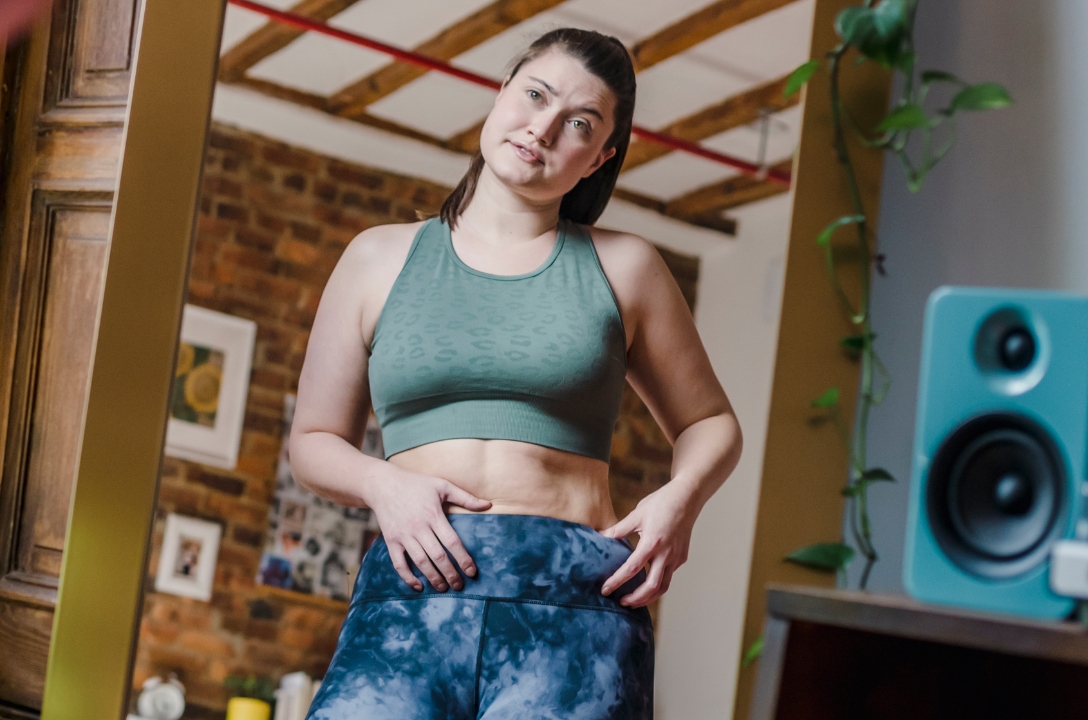
The more we engage in body checking behaviours (e.g. weighing yourself, looking at your body in the mirror, pinching/feeling specific parts), the more we feel like our bodies aren’t good enough because of how they look. Reducing body checking is pivotal in helping you think less about your appearance.
The first step in doing this is making yourself aware of these behaviours. Think about your day-to-day life and consider if you currently engage in any of these behaviours frequently. Then pick one specific behaviour to reduce. A good way to help this process is to swap it for a different activity e.g. if you are looking at yourself in the mirror each morning, instead start a journal and write down one thing about your body you are grateful for.
Another strategy that can help is working on mindfulness.
When you feel your thoughts focusing on your body, work on recognising you are having these thoughts and shifting them back to focus on the present and what is happening around you.
To help get you started, a good activity is to focus on the 5 senses – what can you hear/feel/smell/touch/see. Apps such as Calm and Headspace can also help improve your mindfulness skills.
4. Reducing Reassurance Seeking
This is a form of body checking where you constantly seek reassurance from those around you about how your body looks which as reinforces a focus on your body.
To help reduce this, you can ask those around you to remind you that you are doing it but you can also work on it internally.
This can be done similarly to the strategies we discussed previously around body checking.
View this post on Instagram
5. Filling Up Your Life Pie Chart
If you haven’t made a pie chart before, this is essentially a circle with lots of triangular sections of different sizes.
In a life pie, each section reflects how much of your day is spend thinking about certain things. These may include work, relationships, spirituality, study, etc.
This will look very different for everyone.
When we have poor body image, it is very common for there to be a large section designated to thinking about our body image. If you are working to think less about your appearance, we want to decrease this part of our life pie.
Imagine what your life would be like if you didn’t spend so much time focusing on your body – what extra things could you do/achieve?
The things that come to mind are the things we want to try and incorporate more of into your life in replacement of body image thoughts. This could be hobbies, social events or sports.
6. Learning About Diet Culture, Weight Stigma And Internalised Weight Bias
This could be through listening to podcasts (such as this one) or engaging with educational social media accounts.
This can help with building resilience and change/challenge the narrative you have built about your body over time.
Once you have built this resilience to diet culture, you can begin to think less about your appearance.
7. Have Difficult Conversations With Friends and Family
If you have people in your life you are constantly commenting on how you look, this is very unhelpful.
Having conversations asking them to stop making these comments because you are trying to work on your body image can be very challenging but often people don’t even realise they are doing it until you make them aware of it.
One tip to help is using “I” statements – e.g. “I am trying to work on my body image at the moment and sometimes when I hear these comments/phrases it makes me feel ___.”
8. Make Sure You’re Eating Enough
When our food intake is restricted and we create rigid food rules, irrational and often critical thoughts about our body tend to get louder.
Undereating doesn’t just impact us physically, it also affects our brain’s ability to think clearly, regulate emotions, and be flexible. When your body isn’t getting enough energy, it can heighten preoccupation with food, body checking, comparison, and negative self-talk.
This isn’t a lack of willpower or “being too focused on your body”, it’s a biological response. Your body is wired for survival, and when it senses a lack of adequate nourishment, a number of physiological processes switch on to protect you.
For example, hunger hormones like ghrelin increase, while hormones that help you feel full and satisfied can decrease.
There’s also a cognitive impact. When the brain isn’t receiving enough energy (particularly glucose, its primary fuel source), it can reduce your capacity for flexible thinking and emotional regulation.
This can make black-and-white thoughts about food and your body feel more convincing and harder to challenge. You might notice more rigidity (“I’ve already messed up, so what’s the point”) or more intense body dissatisfaction.
In the Minnesota Starvation Experiment, participants who were previously well began to experience obsessive thoughts about food, increased body preoccupation, irritability, low mood, and a loss of interest in other areas of life—all as a direct result of being underfed.
Their brains were doing exactly what they were designed to do in a state of deprivation: focus on survival.
Eating enough, regularly and consistently, is one of the most supportive things you can do for both your physical and mental wellbeing. It helps stabilise your mood, reduce obsessive or intrusive thoughts, and create a sense of safety in your body.
Over time, this can soften the intensity of body image distress and make space for more neutral, or even compassionate thoughts to emerge.
If you’re struggling with body hate, it might feel counterintuitive to eat more or loosen food rules. But nourishment is not something you need to earn it’s something your body deserves, every single day.
9. Think About Why You’re Exercising
If you are exercising to try and burn calories or manipulate your body in some way, it is probably not joyful movement.
Joyful movement is movement which is at least in some ways fun and actually leaves you feeling good after.
Dreading your exercise could be a red flag that your aren’t exercising for the right reasons. Another red flag is if you feel guilty about having a rest day. Think about if your current relationship feeds into your body image.
If so, it is a good idea to either replace this exercise with joyful movement or even having a break from all exercise until you are in a better mindset. Thinking about the movement you enjoyed as a child can be a good place to start to find joyful movement.
View this post on Instagram
10. Work With A Psychologist, GP and Eating Disorder Dietitian.
Improving your body image is very difficult, especially to do alone.
If you would like to think less about your appearance, having the support of a professional such as a psychologist, dietitian or body image coach can listen to you and help you through this journey. In general, recovery is quicker if you seek help.
It can also be beneficial to work with an eating disorder dietitian. Dietitian’s who are Credentialed Eating Disorder Clinicians have done further training in working in the space of eating disorders, disordered eating and body image concerns.
If you are concerned that you may have an eating disorder, you also may wish to speak to your GP about being referred to a dietitian and psychologist under an Medicare MBS Eating Disorder Treatment Plan.



Comments +